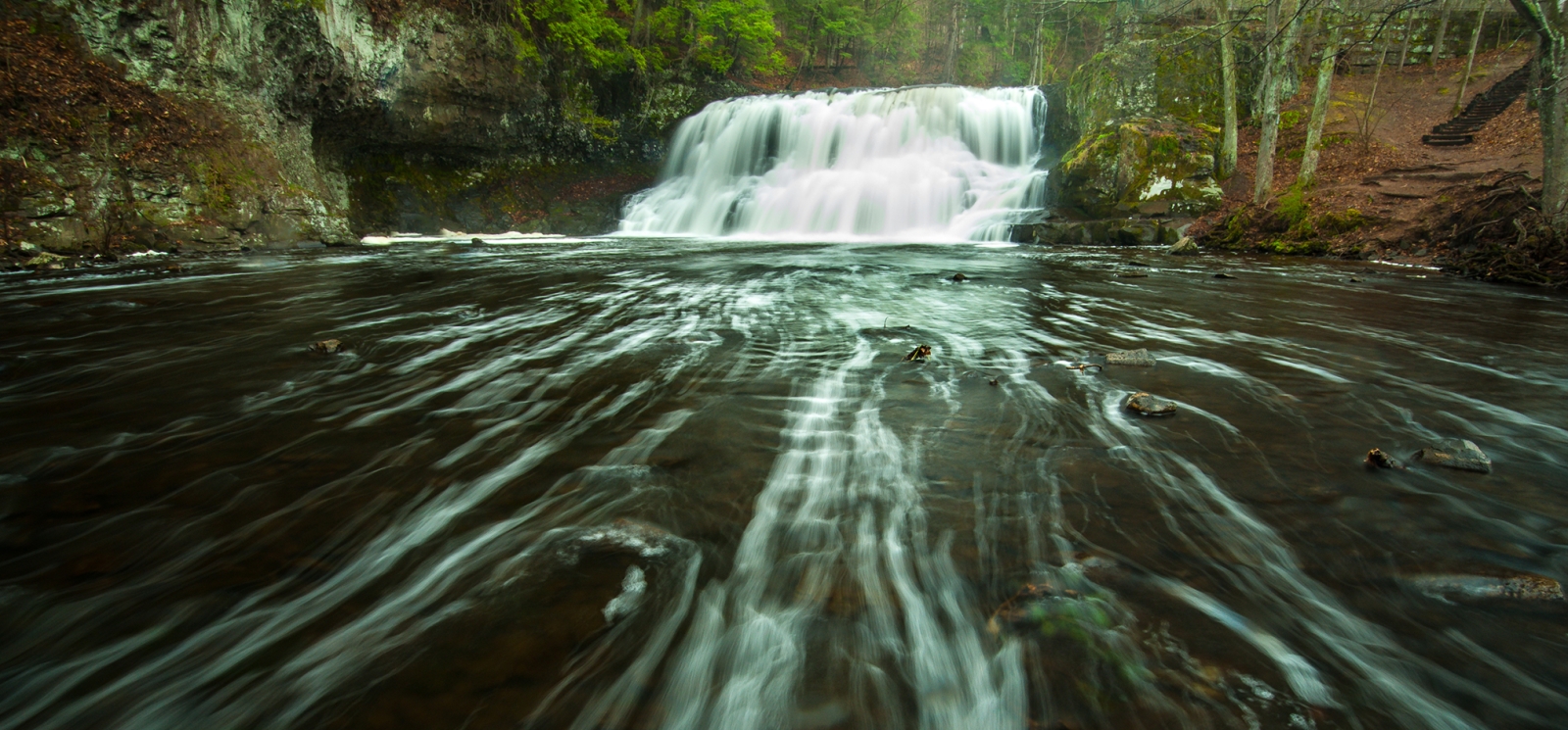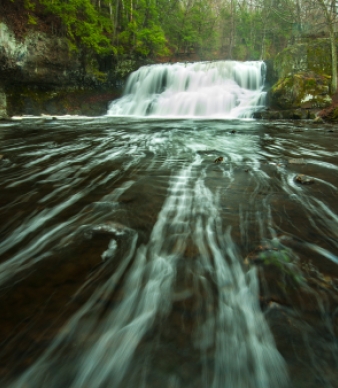



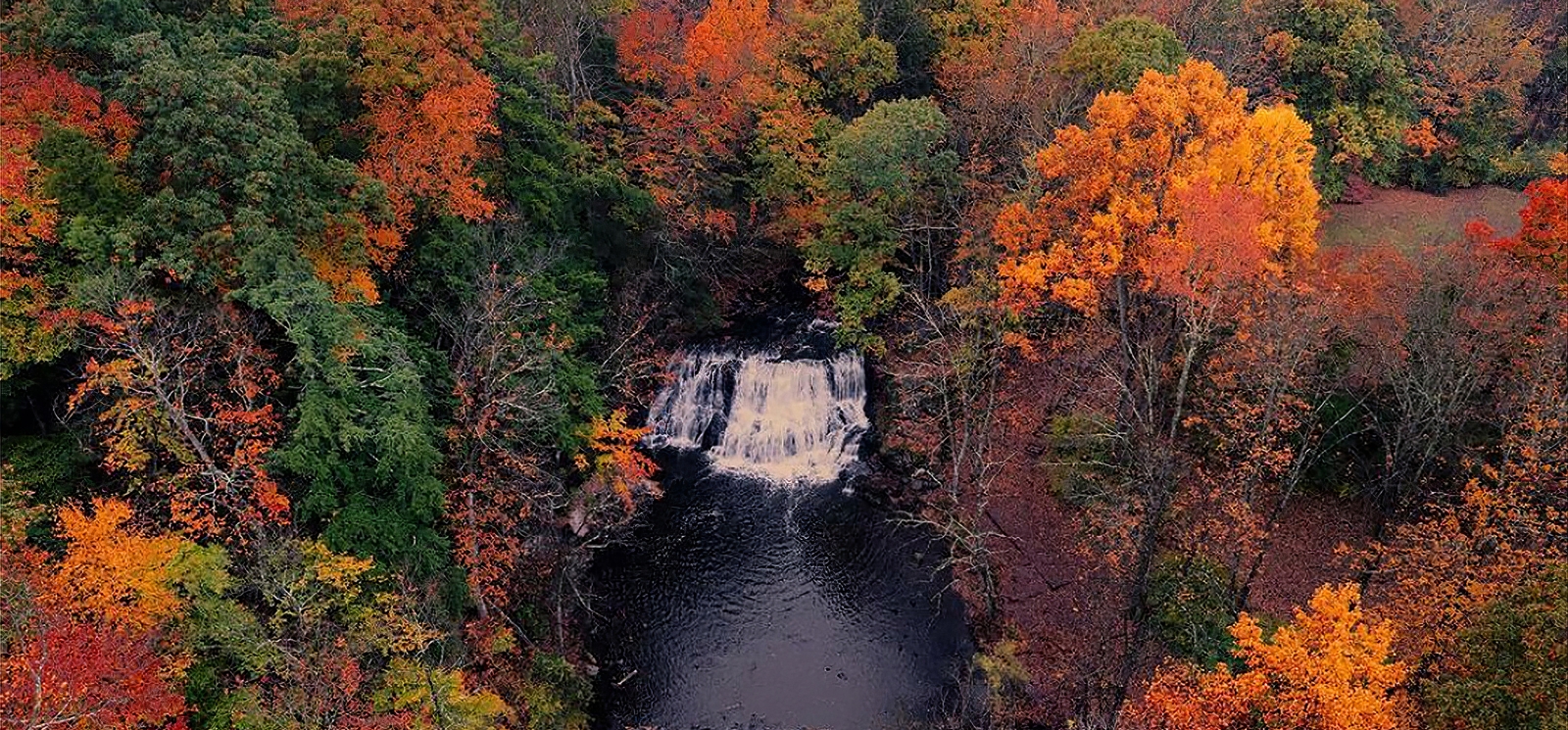
Wadsworth Falls State Park
Middlefield/Middletown, CT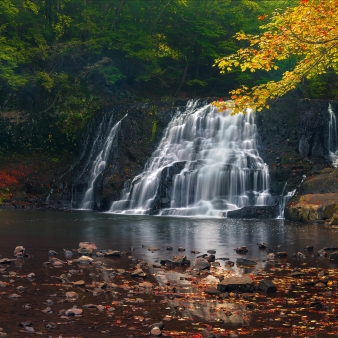


Main (860) 345-8521
Overview
KNOW BEFORE YOU GO
- An alcohol ban is in place at Wadsworth Falls State Park
- Bus Permits are required for mid-size and full-size buses seating 30 or more passengers
- Trail Map
Fishing
Know Before You Go
Before heading out, be sure to check the latest river conditions and fishing regulations.
Geology
Wadsworth Falls State Park is made up of some of the youngest rocks in the state of Connecticut, only about 200 million years old. About 250 million years ago, all of Earth's land made up one huge continent called Pangea. Around this time, it began to break up, and large pieces of continental crust began to move in various directions. What is now North America broke away from present-day Europe and Africa. As this occurred, tension fractures formed in the land, such as happens if you try to stretch cookie dough or modeling clay. Two such fractures formed in central Connecticut, allowing a long, narrow valley to drop below the level of the surrounding land.
Sediments from the surrounding highlands washed into the basin. Deep fractures formed in some places, and lava flowed up to the surface from the upper mantle. Three such lava flows filled the valley and covered the surrounding uplands. In between the flows, sediments continued to flow into the still-dropping valley, forming sedimentary rock layers. Finally, the eastern side of the valley dropped faster than the western side, so now the rocks all dip toward the east. Over the intervening 200 million years, the higher uplands have eroded down so they are now much lower than they were, and the basalts have all been eroded off of them. Basalts are now found only in the valley, where their lower elevation protected them from erosion.
Rock Types Found on Main Trail:
Igneous (Basalt), Sedimentary (Arkose)
Rock Units:
Hampden Basalt (Jurassic): dark gray, orange- to brown weathering basalt; Portland Arkose (Jurassic): reddish-brown arkose (sandstone)
Interesting Geologic Features:
Differential weathering, Cross-bedding, Columnar basalt, Basalt vesicles, Two basalt flows
Hiking
Historic
Picnicking
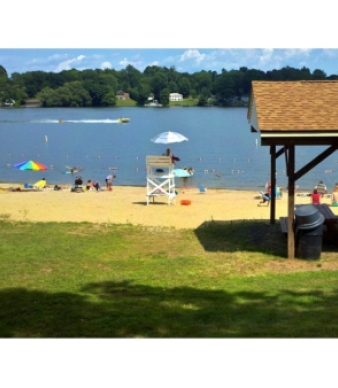
Swimming
Know Before You Go:
- Current Water Quality Report (updated weekly, Memorial Day – Labor Day)
- Beach Regulations and Swimming Safety Information
Winter
Additional Park Info
FREE – In-State Registered Vehicles
$10 – Out-of-State Vehicles (Weekdays)
$15 – Out-of-State Vehicles (Weekends/Holidays)
$112 – Out-of-State Vehicles (Season Pass)
Trails & Park Grounds
Yes, on leash
Beach
Not permitted