


Mohawk State Park/Forest
Goshen/Cornwall, CT


Main (860) 491-3620

Overview
KNOW BEFORE YOU GO
- Buses seating more than 30 passengers are not allowed at this park
- Summer Trail Map - South
- Summer Trail Map - North
- Winter Trail Map - South
- Winter Trail Map - North
Camping
Backpack Campsite and Shelters
Head into the backcountry and stay in one of the park’s three backpacking campsites, available by reservation only. Permits are required. Please visit our backpack camping page for more information and the application. Please note that applications must be received at least two weeks before your intended stay.
Youth Group Camping
- 6 sites available, Site 1 accommodates up to 24 campers, Sites 2, 3, & 4 accommodate up to 16 campers, and Sites 5 & 6 accommodate up to 20 campers
- Open to qualified youth groups only
- Advance reservations are required
- Youth Group Camping
Fishing
KNOW BEFORE YOU GO
Before heading out, be sure to check the latest water conditions and fishing regulations.
Forest Management
There are 33 State Forests totaling about 175,000 acres in Connecticut. They are managed by the Department of Energy and Environmental Protection, Division of Forestry. The Division of Forestry seeks to develop a vigorous, resilient, forest environment capable of sustaining the wide range of demands that the public places on these lands. These demands include a variety of recreational experiences, natural diversity (including threatened and endangered species), the preservation of unique sites (both geologic and archaeological), the provision of raw materials as forest products, and the maintenance of wildlife and fisheries habitats. The Division’s professional foresters work to ensure that these forests remain healthy and vigorous while serving the needs of the citizens of Connecticut.
Connecticut’s woodlands offer many benefits and ecosystem services such as:
- Forest Ecosystem Health and Diversity – Healthy and diverse forest ecosystems provide highly functional, valuable, and a resilient mix of habitats for plants and animals.
- Wildlife Habitat – Many of Connecticut’s wildlife species, both common and rare, use different kinds of forested habitats. It is important to create a variety of habitats for animals that have different needs.
- Climate Change Mitigation through Sequestration and Storage – As climate change continues to be an important global issue, Connecticut’s State Forests can mitigate climate change by sequestering and storing carbon in vegetation above and below ground and as long-lived wood products used locally and beyond.
- Environmental Protection – Connecticut’s State Forests provide environmental benefits such as cleaning the air, protecting and improving water quality, and contributing to soil health.
- Forest Protection – Managing Connecticut’s State Forests helps reduce susceptibility to threats such as wildfire, weather events, and invasive plants and insects, keeping them healthy and productive while minimizing spread to neighboring private forestlands.
- Economic Benefits – Sustainably harvesting forest products like timber, firewood, witch-hazel, and maple syrup from Connecticut’s State Forests provides jobs and raw material for a locally-sourced, forest-based, green economy. The State Forests provide a model for private forest landowners to consider when managing their properties.
- Recreational/Health Benefits – Recreation opportunities abound across Connecticut’s State Forest system providing a local and economical way to stay healthy and active for Connecticut’s residents and guests.
View current forest management plans for all state forests.
Hiking
- See the Connecticut Forest and Park Association Mohawk Trail Description
- Letterboxing Clues
Nature
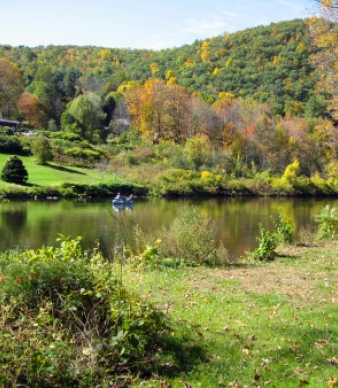
A section of the Mohawk Trail provides hikers with interesting views and an occasional glimpse of deer, fox or bobcat. Both stream and pond fishing are popular within the forest. Multiple use of trails includes over ten miles devoted to snowmobiles when the snow depth is 6 inches or more.
Picnicking
Winter
Downhill Skiing, Ice Climbing, Snow Tubing
Snowmobiling
10.5 miles of trails wind through the linear park toward the Mohawk Mountain communications tower. Because of the forest’s linear land configuration and layout, expect two-way traffic and use caution while riding.
To find the trailhead, enter the park 1.5 miles east of the intersection of Routes 4, 43 and 128, follow the forest road 1.5 miles to "T" intersection. Turn left, drive 0.2 miles, and look for the parking lot on your right.
Additional Park Info
FREE – In-State Registered Vehicles
$15 – Out-of-State Vehicles (Weekdays)
$22 – Out-of-State Vehicles (Weekends/Holidays)
$7 – Out-of-State Vehicles (After 4pm)
$112 – Out-of-State Vehicles (Season Pass)
Overlook – Vehicles
Picnic Areas & Hiking Trails
Yes, on leash